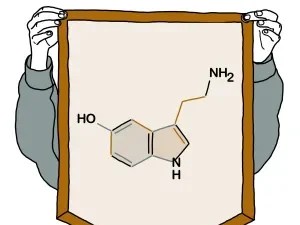
There’s nothing impulsive about a synapse. The rules for living are aggravated by a mental health condition, and in some instances, when institutionalization is necessary, go retrograde— bent back on themselves and compounded by the necessity of withdrawal. Yogis preach of going inward, seeking the unknown cavities of our internal landscapes. You’d argue that a mental patient is just as experienced as the next shaman in tracing those silent, pink-walled, muscular paths of interiority. The inner lining of the gut; the head, its chambers of electrical complexities: every neuron its own small science experiment laid adjacent to the jellyfishing quality of pulsating synapses.
There is a quality to the air there that stands the chance of falling flat and cliched if you’ve spent any time with mental health literature or cinema. This description begs for honesty, the type of strict, unscrupulous parsement of words you consider yourself incapable of accomplishing without patience and the generosity of the reader’s imagination. You stand the chance of failing at not only description but the summation of immense character (a mental health writer’s worst nightmare. The unforgivable variety.) Let us begin en scene, once past security, and with red, paper parking number in tow–settled nicely on the dashboard, of easy view to any passerby or staff–past the wide, silent pond on the left–the immobility of its lone, standing stork, stock-image straight against the water’s humble lapping–the canopy of oaks that frame patient’s, visitor’s, and health provider’s entry into the facility. Let’s begin again on the quality of air: opaque, something smoothed out and hushed about it, something you’ve read about in books about convents or very old places in which lives have been kept and held at a remove from civilization. To be held against the currents of society because one simply cannot cope is an attractive idea when you consider the alternative: the capitalistic, quasi-maniacal qualities of modern society, how we’re continually pushed toward its abrasive bustle, the more, more, more quality of everyday living backed against a looped soundtrack of phone chimes and software updates and 24 hour news channels set to ice by sets of clicking teeth.
You think on this quality while driving up the lush, oak-framed entryway—think about it more when you register for a calling card to go see your mother. Suddenly, the lady at the front desk transcends time and distance and is, with finite, magicked speed, the lady at the bursar at your Alma mater: you’re 18 again, newly prepped on promotional materials about gonorrhea and HPV and student organizations you wish, desperately, you had the gumption or social skills to join. She smiles at you kindly and slowly, and with the requisite grace of seasoned penmanship, fills out a paper slip that includes the patient’s name and building number, visitor’s name and relation to patient, date, time, and authorized signature. It’s the 60’s but not: time here is pressed paused and without a doubt in your mind you recognize this as a positive thing. In hopes of healing, The Mississippi State Hospital holds steady its monopoly on time, cloaking its patients in a retardaire tempo for their protection, for the promotion of sanity in a world gone to hell.
Bipolar Disorder is the ghost pressed up against you as you make your way towards Building 201. It’s on the outskirts of the campus, one you can only reach by looping your way through the red bricked buildings and shaded, one-way streets. Lines of nice SUV’s are parked tidily on either side. Bipolar Disorder is the receptacle in which you place your impermanence, the enormously skittish sense of self you’ve mistaken for actualized ego over the years. Bipolar disorder is a repository for your childhood. The singular experience of watching a loved one’s brain collapse in on itself like a dark star is a type of witnessing that resists productive description or explanation. The profundity of its after-effects: un-checked psychosis and its prismatic, life-altering consequences, the emergency hospitalization, the deadlocked time between institutionalization and convalesce, remain like a garbled network of wiring to some complex electronic system you’ve lost the instructions to. C-PTSD has a funny effect on people, removes large swathes of coded memory so that recollection becomes a game of guesswork and inference rather than reliable translation. These days, you rely on fact as much as possible; tread carefully around the craters of corrupted memory you’ve lost access to. A trauma response isn’t enacted but acts upon a person in the same way a leg knocks up when the physician taps rubber mallet against kneecap: it’s rote, ingrained, chronic like breathing, as inborn as a heartbeat.
The waiting room you’re led to has furniture with round, obvious edges and is bare except for benches and a table. It’s lunchtime, and the residents are pooled in the cafeteria, a few spilling out into the hallway. She meets you there with bright eyes and rumpled hair and a blue wristband on her left, which she explains she’s managed to earn through good behavior. Your talk is brief, cut short by the presence of a staff member, there’s a language you’re desperate to speak with her that isn’t available in this environment. Your talk feels coded. Her pupils are pinpricks. She rests her head against her left shoulder for a minute and closes her eyes as if in prayer. You ask about the supplies you’d dropped off and she speaks of stolen eyeglasses and a desperate need for another sweatshirt. Books: yes, she has them. You say the wrong thing when attempting to relay love in a way that suits these circumstances but fail to do so, stilted by the fluorescence and listening guard at the door and something else, too.
When you’re leaving, making a bungling attempt at navigating the slim corridors of streets, you hear a noise that sounds like a gong. The noise is at once both readily present and faint—it fills the air next to your left ear and you momentarily turn in your seat to catch the culprit. No bells in sight, and the noise has already faded, whatever remnants of Pre-Civil War ghosts are now put to rest. You imagine them walking along the sidewalks with their backs bent inward against their distrust of automobiles, of modernity, of people like yourself—sad strangers losing their way on some off-handed Saturday. How do you reconcile yourself with such a place that feels several eras removed from your present? Maybe you don’t. Sleepy Autumn morning time and a silence that sits heavy on the conscience. You could get lost in here if you let yourself, part of you wants to.
Mary Buchanan is a teacher from Mississippi whose writing flirts with topics centered on mental health, fabulist fiction, and spirituality. She is a writer, educator, and occasional tarot card puller, and is editor of Libre. She received her BA in English from The University of Mississippi Honors College and her MFA in fiction from Louisiana State University. You can find her work published or forthcoming in Bending Genres, Anti-Heroin Chic, Hobart, Tiny Molecules, Brilliant Flash Fiction, and The Razor.
 Serotonin