Buy Now on Ingram.
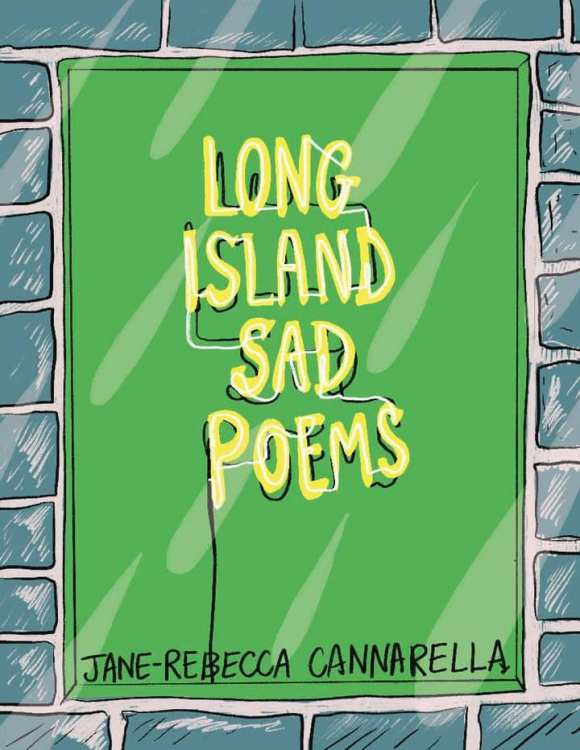
Available now through Ingram! Click the link above to buy your copy. Long Island Sad Poems navigates the inner world of mental illness in connection with the external environment, linking objects with memories and elements with emotions in a captivating display of how language can uncover the depths of our sadness. Readers familiar with any east coast shore town will recognize the landscape of the sound, the emptiness of the off season, and the nostalgia for better days. These poems are a sensory panacea for sadness.
Praise for Long Island Sad Poems
How many Julys at the ocean before the body turns in on itself by doing what the body does when betrayed: bruise, shiver, and grieve? On Long Island Sound prehistoric boulders weather sunlit days and witness the hopeful children who climb them. The adolescent spirit lives forever, longing for better days, nurturing an unbridled will that has the ability to feel everything, but can’t stave off the guilt, the memories and the recriminations, the joy that lies just beyond one’s grasp. At the center of these poems is an arrhythmic heart that beats through every season, lives through the deprivations, catches a glimpse of a mysterious God, and hits that bedrock of truth that, at the end of the day, we all long for and need.
—Michelle Reale, Author of Season of Subtraction
Read Jane-Rebecca’s book and get sticky fingers! You taste childhood saliva, saltwater, duck sauce and pizza grease, etc. You have some adolescent difficulty holding your crush’s unraveling hand. We have fewer nights than next mornings. Incidentally, out the #42 bus window here’s Philadelphia and Lake Michigan and seashore and past bedrooms. All these real things — childhood, handholding, trout, booze, tubal ligation — gush over their myths. Not even midway through and your heart is sore, hand holds book tighter.
—Jeremy Eric Tenenbaum, Editor, SORTES
In Long Island Sad Poems, Jane-Rebecca Cannarella explores sadness in its multitudes: sweet nostalgia, bitter adulthood, love lost, and time gone. Through the luminosity in pizza places in West Philadelphia, a freezing apartment, a childhood jelly donut, Cannarella’s writing is as magical as it is palpable. More than dualities, she explores the complexities of love; there is something both eternal and poignant about her observations: “Love, in its celestial form, / doesn’t need to be seen to be felt.” and “like how love in bad / movies and in churches / is defined by pain.” This collection, then, can be characterized by its vulnerability and craft, and not only fellow sadgirls, but anyone with a heartbeat, will recognize its truth.
—Alison Lubar, author of Philosophers Know Nothing About Love, queer feast, sweet euphemism, It Skips a Generation, METAMOURPHOSIS, and The Other Tree, a recipient of Harbor Editions’ Laureate 2024 Laureate Prize
Not everything in life is easy and some of these poems are a tough read, but feeling uncomfortable due to Ms. Cannarella’s effective use of words to describe some of her life experiences is a fair trade off.
—Ethan Gurn, Philadelphia Railroad Signals Foreman
Jane-Rebecca Cannarella’s Long Island Sad Poems swims at the cusp between a childhood where we each “smell green and appear golden,” where we lick our “lips, tasting how New Year’s Eve would feel in the future” and an adulthood where “love in movies and in churches is defined by pain,” where “the ruins are in secret places,” and where we “bite down on sandwiched pointer and middle fingers to remember our voices.” There is decay and sickness in the way we have scratched the freckles off our faces, but also a hope that the lunar eclipse unfolds in a romantic rond de jambe even behind the clouds. God still exists “because of fingerprints, and how each dogs’ nose has a unique pattern.” This is a book of escape, unwrapping, and opening through each lover’s fight or forlorn hangover. We lift each baby bird from the ground into our hands. At the end of this collection, we are all holding the “charred (and beating) heart of a balloon boy who died at sea.”
—Scott Ferry, author of 500 Hidden Teeth
These Long Island Sad Poems are intimate and other-worldly, “toothy, yet tender.” Cannarella is carving out her own language and filling it with jelly, lipsmackers, and lots of salt. Moments are made into fairy tales. Temporary forts are built in the everyday to hide out and sleep in. To dream. Sad, yes, and funny, and romantic in the way memories of summer are.
—Kim Göransson; Superfan Zine, Editor in Chief
Jane-Rebecca Cannarella blurs the boundaries between us and the environments we swim in. Water is the link, much of it salt, flavor of tears and the sea. A slanted connection of the poems with their titles kicks up the reader’s visual imagination. Desperation is rendered almost casually––loneliness following self-harm, soup from a can two years expired. Sudden turns into tender humor give us dancing bears in a batch of eggs mid-scramble, speculation on the afterlife of cats, the romance of a solar eclipse. And it takes a poet’s special attention to create a meadow from a handful of grass clippings in a barren garage.
––Anne-Adele Wight, author of An Internet of Containment
 Serotonin