November brought heavy downpours, erasing all traces of the fall foliage from the trees. I slipped outside during a break in the rain and inhaled the crisp late afternoon and fusty scent of wet leaves. Mud swallowed the soles of my sneakers as I stepped onto the grass. Reaching inside the mailbox, I grasped a stack of letters, slightly damp. As I returned to the house, I pulled off my muddy shoes and carried them to the sink. Using a knife to scrape the crud from my shoes, my phone rang. Good grief. I set my sneakers on a paper towel and went to see who was calling.
Glancing at my screen, I saw I had missed six calls from Noah in the space of ten minutes. My heart quickened.
“Noah? What’s wrong?”
“I think I’m going to fail my classes, Mom!”
“Why do you think that?”
“Because I failed the poetry exam I got back today. And I can’t think straight or remember anything anymore.”
“It’s just one test. You are smart and have been doing great in college for four years now.”
“I keep missing my early morning classes because I can’t wake up from the fucking drugs the psychiatrist put me on. I don’t even hear my alarm going off.”
“Did you speak to your doctor?”
“I can’t remember.” Noah’s breath caught, and he gave a small hiccup. “I don’t feel stable, Mom. I feel like something bad is going to happen.”
“What are you afraid of?”
“I don’t know. I just don’t trust myself right now. I feel so empty inside.”
My gut twisted. Noah was completely alone in Montana. And scared. “Would you like me to come out there and stay with you until you’re feeling better?”
“Could you?”
That night, I packed my yoga mat and clothes, unsure how long I would be gone. But since I was not currently working, there was no reason I could not stay for a while. As worried as me, Jeff agreed, encouraging me to stay as long as Noah needed me.
When I arrived in Missoula, harried snow flurries spun in the air, swirling chaotic eddies about my head. I rented a car and drove myself to Noah’s, letting myself in with a hidden key. Tino greeted me at the door, and I scooped her up, surveying the condition of Noah’s new apartment. Dishes in the sink, litter that needed changing, and a bedroom piled high with clothes. But better than I had expected.
Noah arrived home at four, pale and glassy-eyed. He looked awful. But what scared me most was how he walked. Like he did not have full control over his legs. We hugged, and he dropped his knapsack on the dining room table.
“Why are you walking that way?”
“I told you, the meds they put me on!”
“You’re on too much of something, or are having some kind of a reaction.”
“No kidding.”
I brushed off the rude and irritable greeting. This was illness talking. Medications run amuck in his body. “We need to call your doctor. Get you seen.”
Noah shrugged.
“Can I get you something to eat?”
“I’m not hungry.” He collapsed into his leather easy chair.
“I can cook dinner for you tonight, or we can go out. What do you feel like?”
“I don’t have any food in the house.”
“We’ll go out, then, and I’ll grocery shop tomorrow.” I did not understand why Noah was not buying food for himself. There was a market right around the corner, and we gave him a monthly food allowance.
“Do you have exams coming up?”
“Yes.” His eyes snapped open, agitation transforming his face. “I need to get an A on my poetry exam to make up for the test I failed. It’s going to ruin my GPA.”
“Your GPA is too high for any one grade to ruin it anymore. You only have three classes left before you graduate in December.”
“I have to study this weekend.”
“That’s fine. I brought plenty to keep me busy.”
After dinner, I called Jeff to give him an update and then checked into my Airbnb, an apartment in the basement of a house near Noah’s place. Although spacious, the heat was broken, and there was no hot water in the bathroom sink. Late November in Montana was freezing. I hung up my clothes, laid out my yoga mat, and covered the battered kitchen table with a bright cotton scarf from my suitcase. Then I found a half-melted candle in a cabinet and placed it in the center of the table. Home.
The following morning, Noah still was asleep when I arrived at his apartment, so I headed to the grocery store. When I returned, he sat at the kitchen table, cradling a large semi-automatic gun. Noah’s guns had been returned to him when he had presented his hospital discharge summary as proof he was no longer an imminent threat to himself or others.
“Why do you have your gun out?”
“I want to go shooting with you this morning.”
“We are not going shooting. You told me you don’t feel stable on your medications, Noah. That is not a smart time to go shooting. And,” I added, “you just finished telling me how worried you are about your grades. Don’t you have to study?”
“I have time to go shooting, Mom.”
“I am not going shooting. But I will help you with anything you need help with.”
“I’m going to clean my guns then.” He disappeared into his closet and returned carrying a pistol and a hunting rifle.
“You have three guns now?”
“I always had three.”
I eyed the arsenal of guns, fear prickling my spine. I knew Noah believed he was a responsible gun owner and tried to be responsible. And maybe he was. But I also knew, given his mental health, he should not own a gun.
As Noah took apart, cleaned, and reassembled his guns, I busied myself putting away groceries and making breakfast. All the while, I watched how Noah held his guns, treating them with a tender care that scared me.
“I can count on my guns, Mom. They’re one of the only things in my life I can count on.”
I stopped cooking.
“You load the gun, cock it, and pull the trigger, and it does what it is supposed to do. It is one of the only dependable things in my life.”
Fear ricocheted through my brain. Noah was powerless over so much in his life that I was not surprised guns gave him a semblance of control. I could not help but wonder if mass shooters felt this way. Whether their feelings of powerlessness drove them to their horrific acts. And I thought about their mothers. Whether they could have done anything differently.
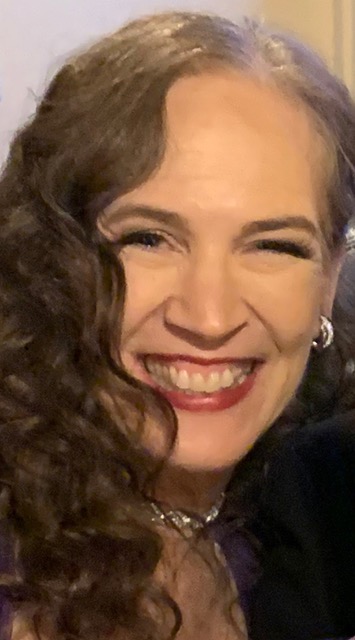
Stacie Dubnow earned a BA from Tufts University and a JD from Georgetown University Law Center, worked as a trial attorney, then as a project manager and in-house counsel fighting for the rights of people with disabilities. She is now retired and writes full-time. Dubnow has published three articles and a poem in a magazine, is a member of the Women’s Fiction Writers Association and The Manuscript Academy, and regularly attends writing workshops and webinars. Read more of her work at https://www.staciedubnow.com/
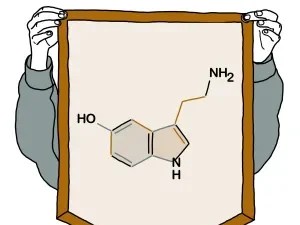
 Serotonin